The Weight of Cloth
A piece of fabric carries more than colour and texture — it carries geography, labour, ritual and time. This essay reflects on why textiles remain one of India's richest cultural archives.

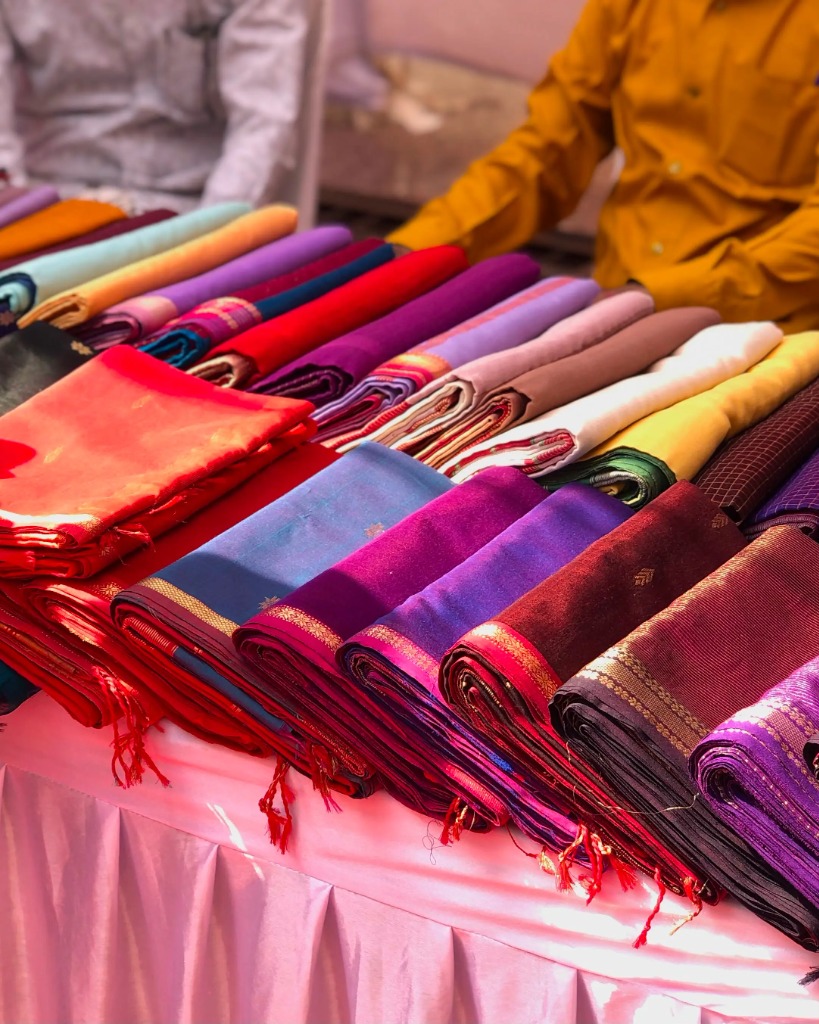
To hold a piece of handwoven cloth is to hold evidence. The thread count, the dye, the irregularities in the weave — each speaks to a region, a season, a community of hands that understood material as meaning. Fabric is not background. It is foreground. It is the primary document of how human beings have organised labour, expressed belief and marked time.
India's textile traditions encompass a geography as complex as its cultural landscape. From the Chanderi weavers of Madhya Pradesh to the Kantha embroiderers of Bengal, from the block printers of Rajasthan to the Pochampally ikat masters of Telangana — the textile map of the subcontinent is a map of civilisations, each with its own visual grammar, its own material logic, its own economy of skill.
What Cloth Carries
A Banarasi silk saree carries the memory of Mughal court aesthetics — the intricate brocade patterns descended from Persian floral traditions absorbed and transformed over centuries of royal patronage. A length of Khadi carries an entirely different weight: Gandhi's politics of self-determination, the spinning wheel as act of resistance, the handspun thread as rejection of colonial industrial manufacture. Both are cloth. Neither is only cloth.
This is what makes textiles such rich archives. Unlike stone or metal, fabric decays. It does not accumulate in palaces and temples. It lives in bodies. It wears. It tears. It is repaired. It is passed down folded in trunks, carried in dowries, cut into smaller pieces when the larger ones can no longer hold. Every seam is a decision. Every patch is a relationship between maker, user and time.
Geography Woven In
The double-ikat technique practised in Patan, Gujarat — the Patola — requires the simultaneous resist-dyeing of both warp and weft threads before weaving, so that the final pattern appears only when the two are perfectly aligned on the loom. This is not a technique that can be improvised. It is a technology of precision that took centuries to develop and exists, in its most complex forms, in perhaps a handful of workshops in the world.
Each Patola carries within it the specific geographic, cultural and economic conditions that made it possible. The silkworm cultivation, the natural dyes sourced from particular plants, the loom design evolved over generations, the community of weavers whose knowledge of colour and pattern has been refined through a practice of daily looking. Remove one element and the fabric changes. Remove the community and the fabric disappears.
Ritual and the Body
Cloth also carries ritual. In many Indian communities, specific textiles mark the passages of life — birth, initiation, marriage, death. The colour of a garment signals status, region and occasion. The way it is draped encodes gender, caste and community belonging. To wear certain cloth in certain ways is to participate in a living system of meaning that has nothing to do with fashion trends and everything to do with cultural continuity.
This is why the threat to India's handloom traditions is not merely an economic problem. It is a cultural emergency. When a weaving community collapses — as many have under pressure from powerloom manufacturing, imported fabrics and shifting markets — the loss is not only of livelihoods. It is of a specific way of seeing colour, a particular geometry of pattern, a vocabulary of cloth that took centuries to build and cannot be reconstructed from museum samples alone.
Reading the Archive
BARE creative approaches textile culture as we approach all material culture — with the conviction that objects are not illustrations of history but primary sources. The cloth is not evidence of the story. The cloth is the story.
To read a handwoven textile carefully is to understand something about the people who made it that no written record can tell you. It is to encounter their labour directly — the hours, the attention, the physical discipline required to produce a single metre of complex weave. It is to recognise that another relationship between making and meaning is possible, and that this relationship has survived in India across thousands of years of social upheaval, political change and material disruption.
The weight of cloth is the weight of all of this. It is not decoration. It is document. It is, for those willing to read it, one of the most complete archives of human culture that the subcontinent has produced.