The Faces That Refuse to Disappear
In a culture obsessed with the new, handmade figures continue to preserve memory, identity and regional aesthetics. BARE creative explores how contemporary design can learn from craft traditions that have survived for generations.

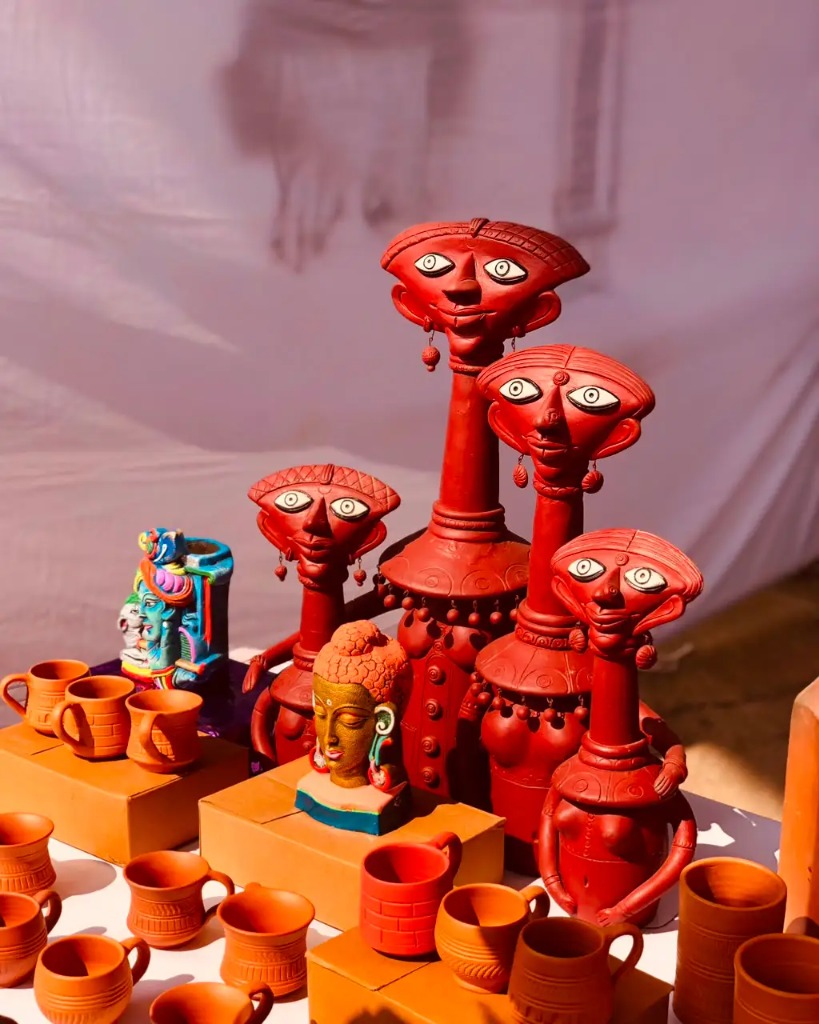
Walk into any craft cluster in central or eastern India and you will find them — figures pressed from red clay, fired in open kilns, painted in ochre and white. Horses without riders. Goddesses with seven arms. Human forms that are not quite human. These are not decorative objects. They are documents.
The terracotta traditions of Rajasthan, West Bengal, Madhya Pradesh and Bihar are among the oldest continuous craft practices in the world. For centuries, communities of potters — the Kumbhars, the Kumars, the Rajbhars — have shaped clay into figures that carry cosmological meaning, ancestral memory and regional identity. They were not made to last forever. Clay returns to earth. That was always the point.
What the Figure Holds
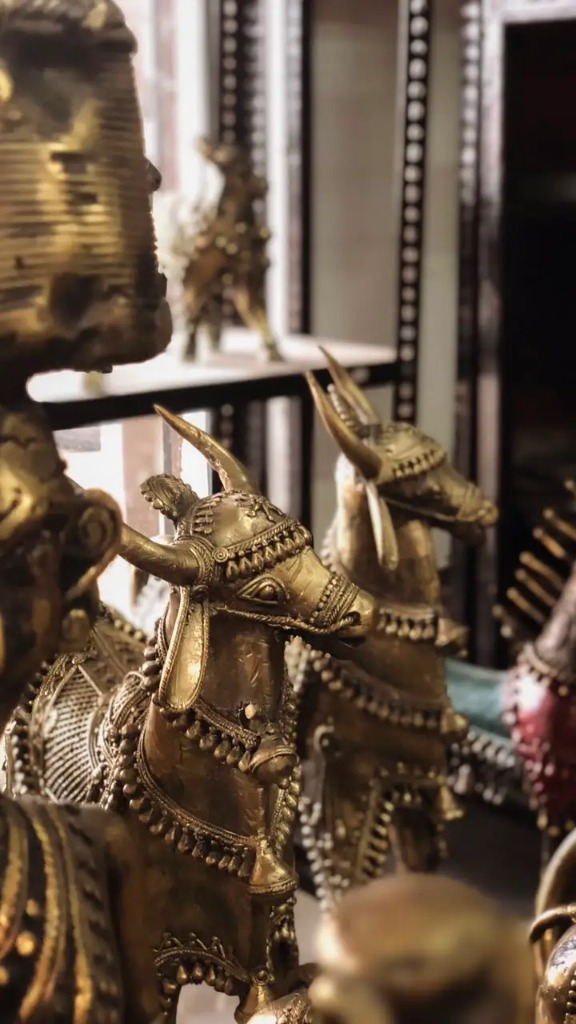
Each figure is a condensed archive. The proportion of the head to the body encodes a regional aesthetic that has been refined over generations. The painted patterns on a Bankura horse follow a visual grammar passed from parent to child without textbooks or institutions. The surface texture — rough, hand-pressed, bearing the marks of fingers — is not a flaw in manufacture. It is the signature of a human hand at work.
Contemporary design has increasingly turned to craft traditions for visual inspiration. But inspiration without understanding risks becoming appropriation. To truly learn from these objects, we need to understand not just what they look like, but what they are made of — materially, socially and historically.
Memory as Design Brief
In a culture obsessed with the new, the handmade figure poses a quiet challenge: what if continuity were a design value? What if a maker's most important skill were not innovation, but the ability to transmit?
The great tribal and folk craft traditions of India are not static. They have always absorbed, adapted and responded to new materials, markets and contexts. What they have not done — or at least, what the best practitioners have not done — is abandoned the interior logic of their form. The Dhokra caster who works in lost-wax metal still thinks in the same spatial grammar as ancestors who worked centuries ago. The continuity is not sentimental. It is structural.
BARE creative believes that contemporary design education has much to learn here. Not in copying forms, but in studying process. In asking: how does a practice survive without a curriculum? How does visual knowledge travel through bodies rather than books? How do communities maintain aesthetic standards without institutions?
The Stakes of Disappearance
Many of these traditions are under severe pressure. Markets have shifted. Young people leave craft clusters for cities. The economics of handmade objects are brutal in a world of cheap mechanical reproduction. When a master potter dies without a successor, it is not just a livelihood that ends — it is a way of seeing, a set of material relationships, a body of encoded knowledge, that disappears with them.
This is why the faces that refuse to disappear matter. They are not just beautiful objects. They are proof that another relationship between making, meaning and material is possible. Contemporary design — if it is serious about culture — cannot afford to look away.