Material Archive: Bamboo
An ongoing visual archive documenting bamboo as a living material — from raw culms and traditional processing techniques to contemporary furniture, architecture and product design.

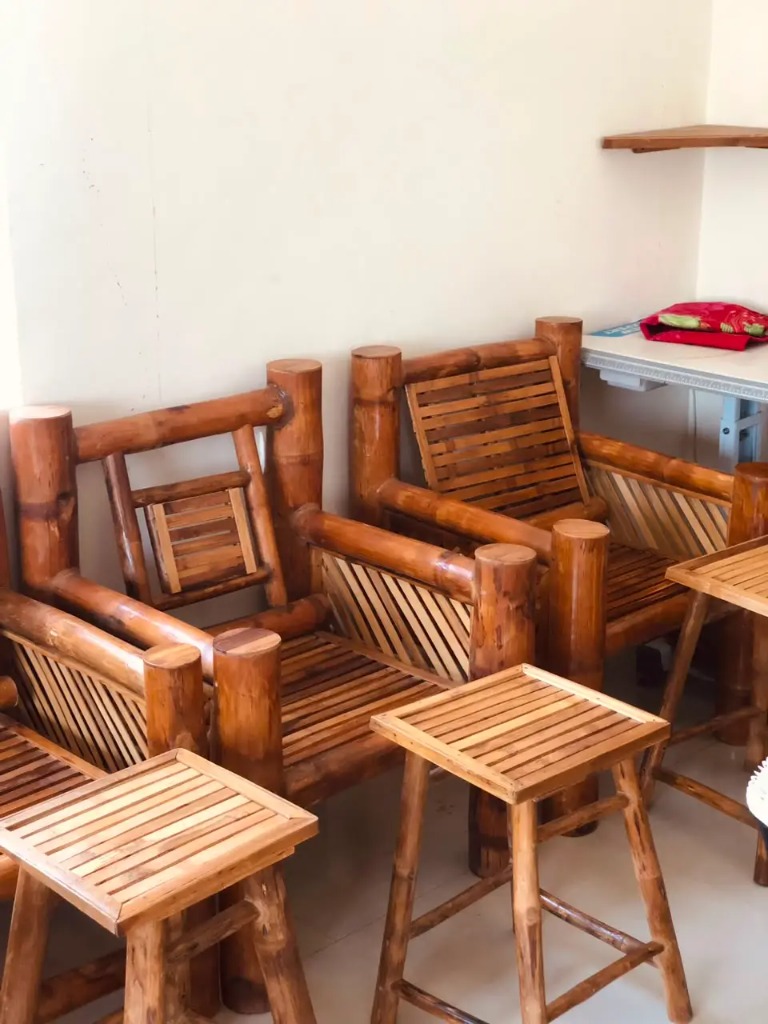
Bamboo is one of the fastest-growing plants on earth — capable of reaching full height in a single season, regenerating without replanting, sequestering carbon at rates that outpace most timber species. But to describe bamboo primarily in the language of sustainability metrics is to miss what makes it so extraordinary. Bamboo is, above all, a cultural material. It has been worked, bent, woven, split, charred and built with across South and Southeast Asia for thousands of years. Every technique is evidence of an intimate, generational relationship between a community and a plant.
This archive begins with that relationship — not with the finished object, but with the raw culm standing in the grove.
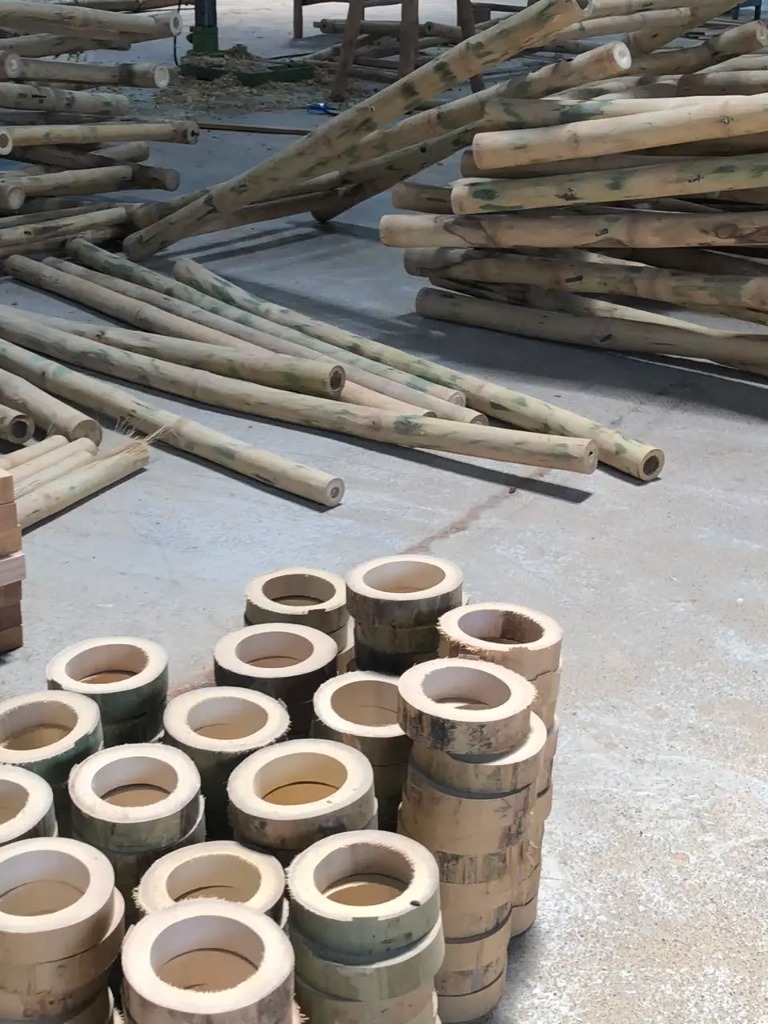
The Raw Material
There are over 1,400 species of bamboo. Not all are suitable for craft or construction. Communities across India, Bangladesh, Vietnam, Japan and Indonesia have developed highly specific knowledge of which species to cut, at what point in their growth cycle, in which season, and using which tools. In many traditions, the lunar calendar governs the harvest: culms cut during certain lunar phases are understood to contain less starch, making them more resistant to insect damage and decay.
Once cut, the culm must be cured. Traditional methods involve standing the freshly cut bamboo upright in a shaded, ventilated space for several weeks — sometimes months — allowing the natural starches to drain and the moisture content to stabilise. This patience is not inefficiency. It is the foundation of durability. Bamboo treated this way can last decades. Bamboo treated carelessly will crack and warp within months.
Processing and Technique
The splitting of bamboo is among the most skilled operations in craft. A master splitter can produce strips of extraordinary uniformity — strips that will become the warp and weft of a woven panel, the spokes of a basket, the ribs of a furniture frame. The tool is simple: a flat-headed knife drawn steadily through the culm, guided by the maker's eye and hand rather than by any mechanical jig. The knowledge is in the body.
From splitting, bamboo passes through a series of further processes depending on its intended application. It may be soaked, steamed and bent into curves. It may be laminated — layers of strips bonded together under pressure to produce panels of remarkable dimensional stability. It may be charred on its exterior to harden the surface and deter insects. Each technique represents centuries of accumulated material intelligence.
Cultural Geography
Bamboo craft is not monolithic. The basket forms of Assam bear no resemblance to those of Nagaland. The furniture traditions of Tripura differ from those of Kerala. The architectural bamboo of Meghalaya — where the Khasi have built suspension bridges from woven bamboo root for centuries — represents a structural engineering knowledge that modern architects are only now beginning to properly study and document.
Each regional tradition reflects the specific bamboo species available locally, the local climate, the local material culture and the specific demands of the communities who developed the practice. To read these objects carefully is to read a geography — to understand how material possibility and cultural necessity produce form.
Contemporary Applications
Bamboo has entered the vocabulary of contemporary architecture and design with increasing seriousness. Structures by architects such as Simon Velez in Colombia and ELEMENTAL in Chile have demonstrated that engineered bamboo can perform at scales and in structural configurations that challenge the dominance of steel and concrete. In India, design studios are working with local craftspeople to develop bamboo furniture and interiors that draw on traditional joinery knowledge while meeting contemporary market expectations.
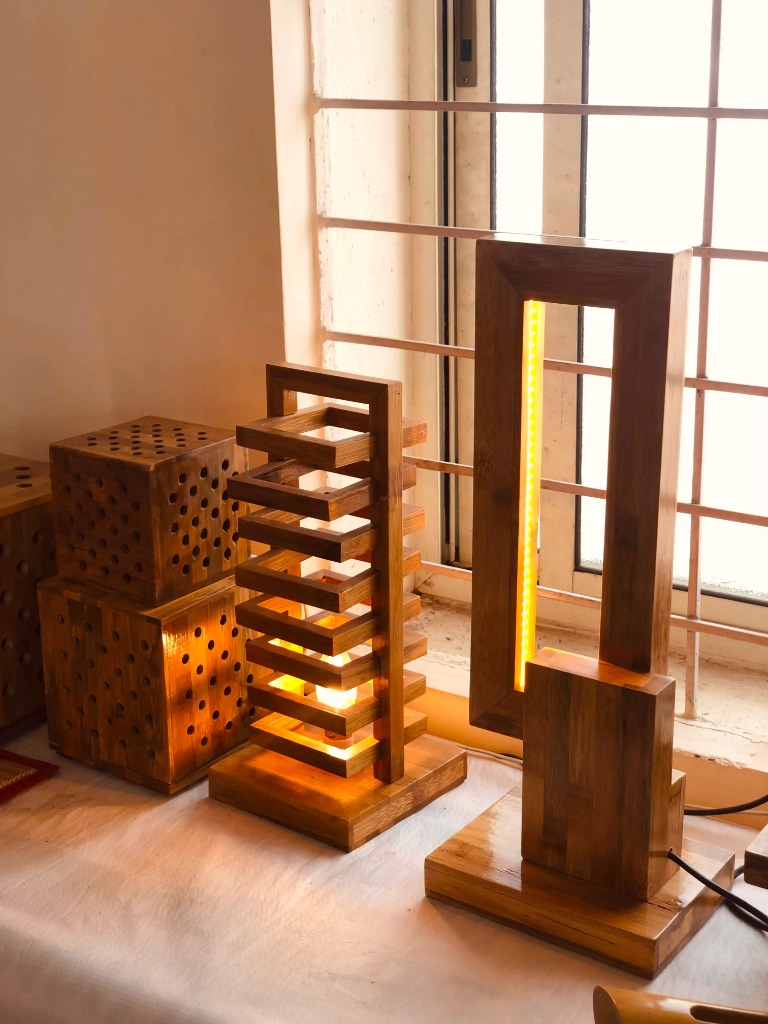
This archive documents both ends of this spectrum — the raw material and the refined object, the workshop and the showroom, the traditional technique and its contemporary translation. The aim is not to argue that bamboo is a solution to every problem. It is to document a living material intelligence that has survived in practice for millennia, and to ask what design can learn from taking it seriously.